
As Black Podcast Listenership Rises, Advertisers Realize the Value of Black Audiences
By Alisha Mess
Adobe Stock Images.
Dr. Tegan Bratcher, a media and public relations professor at the University of North Carolina, has spent years researching the diverse demographics of podcast audiences. With a particular focus on listener engagement, Dr. Bratcher first noticed the rise in Black listenership during the late 2010s, when many of her friends began shifting their focus from traditional TV to video podcasts on YouTube. Intrigued by this growing phenomenon, she chose to study why people engaged so heavily with podcasts for one of her first research surveys as a graduate student.
During her research, Dr. Bratcher found that people of all demographics enjoyed podcasts because of how intimate, relatable, and accessible they were. However, when reviewing larger demographic data, she noticed that podcast audiences skewed white and male, aged 25-40, which she initially questioned, given how diverse the listeners were in her research observations.
"At the time, I thought, 'That can't be right. I think podcasting is a much younger and more diverse demographic than we've been seeing,'" said Dr. Bratcher.
Her earlier suspicions have now been confirmed, as new data from Edison Research shows a marked rise in Black listenership. In their survey over 2,000 podcast listeners, 43% of the U.S. Black adult population are now monthly podcast listeners—5 points higher than the U.S. total population.
Edison Research also revealed that Black women are leading the rise in listenership, as they constitute 55% of Black monthly podcast listenership, while Black men account for 52% of Black weekly podcast listeners.

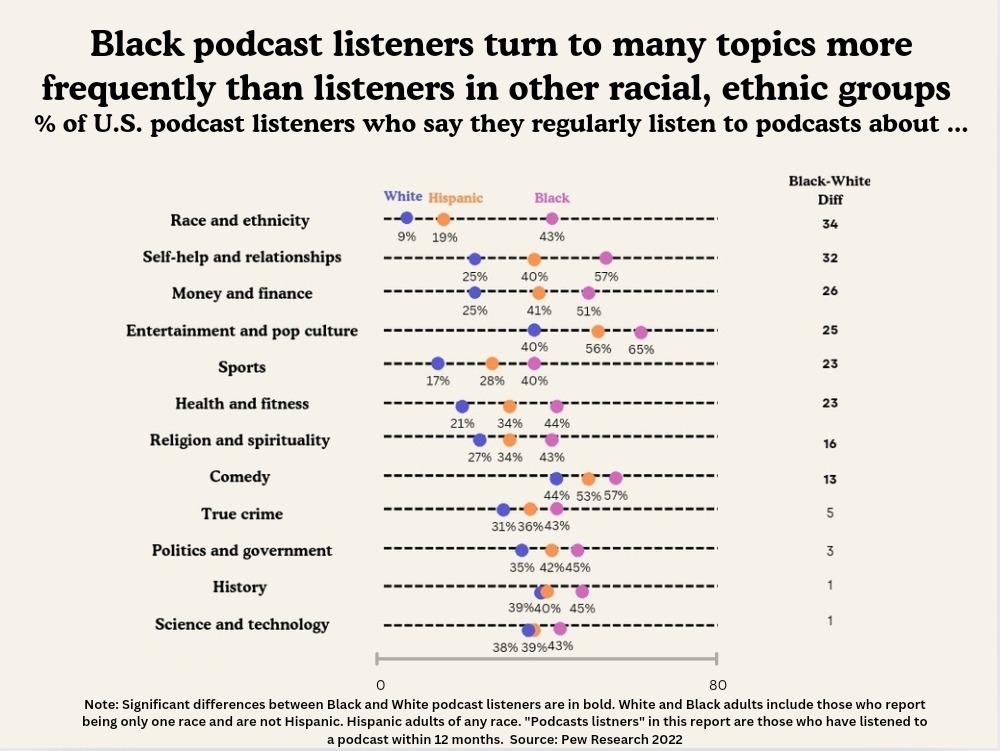
Although these results come in while the podcast industry sees an overall decline in listenership as COVID-19 restrictions ease and people return to their regular schedules, the rise in Black listenership highlights a previously underappreciated market that advertisers have largely overlooked.
For years, mainstream brands tailored their podcast advertising strategies to target their most dominant consumers, white, middle-class audiences. Now, with the growing presence of Black and more diverse listeners, advertisers are finally re-evaluating their strategies to connect with this audience through sponsership of Black-centric content, brand messaging shifts and more. However, podcast industry experts like Dr. Brianna Barner say that this shift in focus is long overdue.
"Black people have always listened to podcasts," said Dr. Barner. "At the beginning of the 'podcast renaissance' in 2014, when the hit podcast Serial blew up, the assumption was that Black people did not listen to podcasts, but that was not true."
Dr. Barner points out that pioneering Black podcasts like This Week In Blackness (2008), The Black Guy Who Tips (2010), and The Combat Jack Show (2013) all garnered strong Black audience engagement as they discussed topics centered around race, culture, music, and current events, but received limited attention from mainstream advertisers and were frequently overlooked by major research companies. This lack of recognition was partly because these early Black podcasts, along with many others of its kind, were not seen as lucrative as mainstream shows targeting a white, middle-class audience, leading to their exclusion from early advertising strategies.
"Advertisers are starting to take Black podcast listeners as a serious demographic," said Dr. Barner, adding that they are now realizing "they've been leaving money on the table by not courting this group."
Recent Edison Research studies show that 75% of monthly Black podcast listeners actively seek out content that highlights Black stories and Black perspectives.
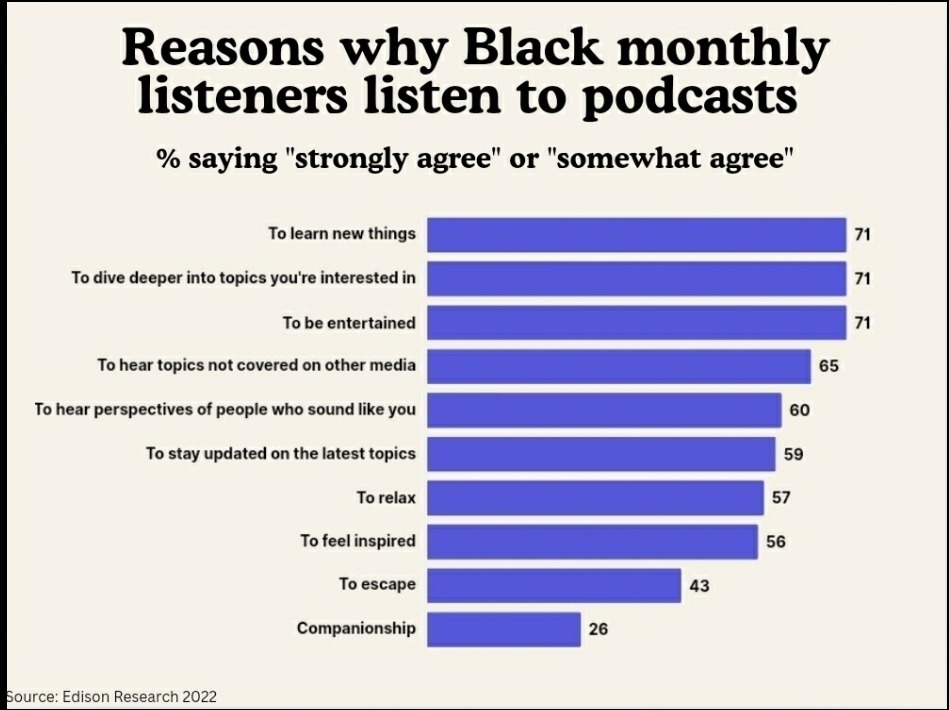
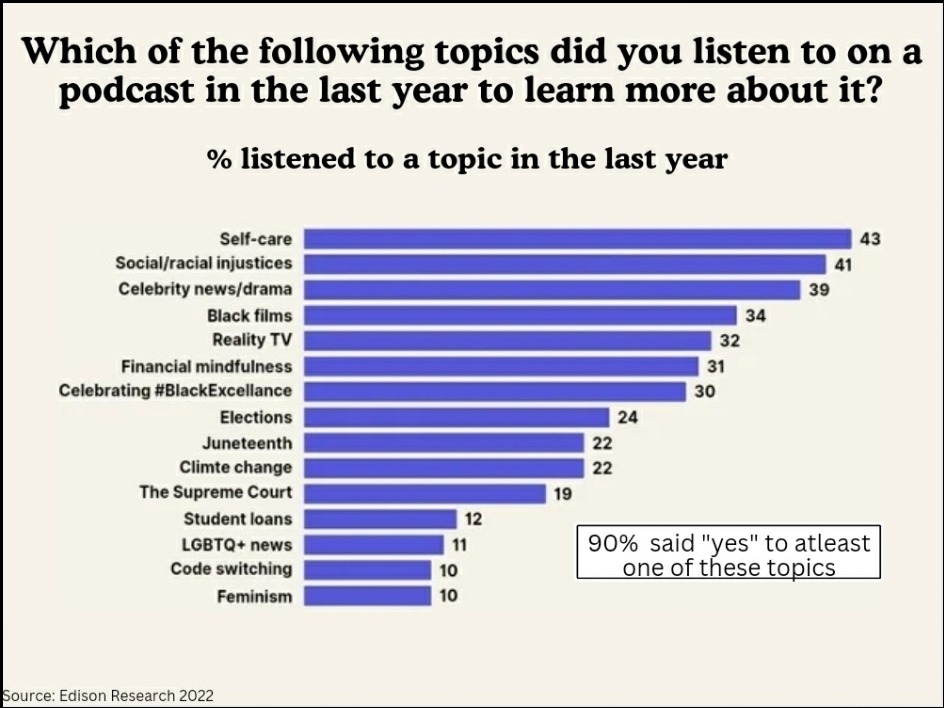
"This is a space where we see the most authentic and diverse stories and narratives of Black people," said Dr. Bratcher as she explained why Black people are more likely to tune into podcasts where they feel represented. "There are thousands of podcasts where people who look like you, who sound like you, who use the same slang and language as you are talking about really niche subjects."
With podcasts being such an intimate space, representation is not just essential for creating stories that resonate with audiences; it's mandatory for fostering consistent engagement within these communities. Studies show that 57% of Black monthly podcast listeners aged 18-24 prefer podcasts hosted by Black creators, a preference shared by 35% of listeners aged 55 and above.
This connection shared among Black listeners and hosts is a key part of boosting brand engagement, which advertisers are starting to notice. According to Edison Research, 52% of Black listeners who have listened to a Black-hosted podcast in the past month are more likely to purchase an advertised product than those who listen to non-Black-hosted podcasts.
After fully acknowledging the financial potential of Black audiences, research studies reported that in the first half of 2022, over 6,000 advertisers spent $1.2 billion trying to connect with Black and African American consumers. This investment is the largest amount ever spent on this demographic of listeners and was intended to sponsor Black-centric content, partnering with influential creators, airing targeted digital ad campaigns, and supporting community-focused initiatives. As Dr. Barner points out, this decision by advertisers not only marks progress in how Black listeners are viewed, but also serves as a constant reminder of why Black audiences should never be overlooked.
"There's power within these spaces, and advertisers have a reason to be interested and invested, too," said Dr. Barner.
Post a comment